
PRP in Hair Loss: Does It Work?
How PRP works, which cases it may help and where its limits are, including its role after an FUE transplant. Every plan starts with a physician evaluation.
Fully performed by a doctor
Along with a medical team
Packages from $3,950 USD
Clear pricing after evaluation
Only 20 min from San Diego
One planned visit to Tijuana
12 months of medical follow-up
Support after you return home
What is PRP?
PRP stands for Platelet-Rich Plasma. It is a treatment that uses a sample of the patient’s own blood. The process usually includes a small blood draw, centrifuge processing, separation of platelet-rich plasma and injection into targeted scalp areas. Platelets contain growth factors that may support tissue repair and follicle activity.
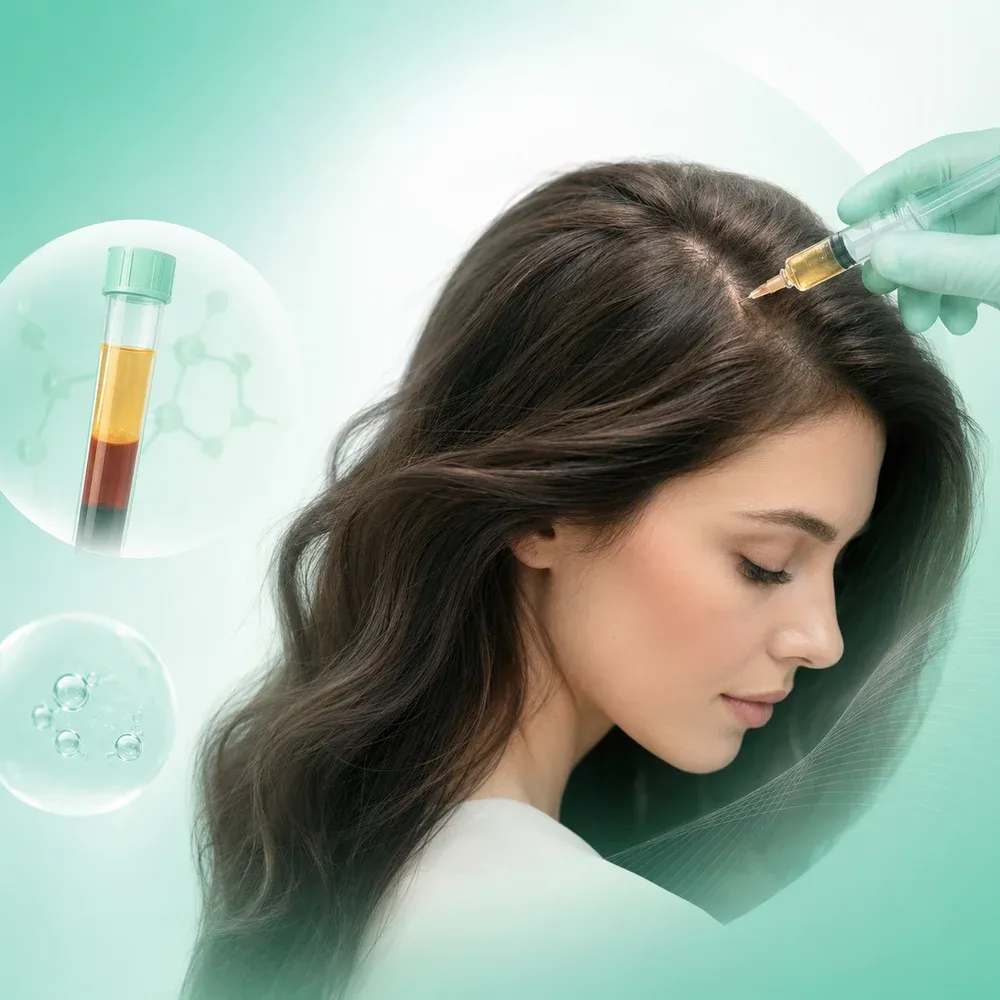
What PRP may help with
- Early hair thinning.
- Mild androgenic alopecia.
- Diffuse shedding.
- Maintenance after transplant.
- Support after FUE.
- Selected women with thinning.
- Patients who are not ready for surgery.
- Patients whose follicles are still active.
What PRP cannot do
PRP should not be marketed as a miracle. It cannot create a full head of hair where follicles are no longer active, and it cannot replace a transplant when a patient has advanced bald areas. PRP may not be enough if the area has been bald for years, hair loss is advanced, follicles are no longer active, there is an untreated medical cause, the plan clearly requires FUE or expectations are unrealistic.
How PRP fits your situation
Early hair loss. PRP tends to make the most sense when there is still existing hair in the thinning area. The goal is not to move hair from one place to another. The goal is to support the scalp environment and existing follicles. Some patients may also discuss medical therapy with a qualified physician.
After FUE. PRP may be used after FUE in selected cases to support healing and the transplant environment. PRP does not guarantee graft survival. It may support the process, but surgical technique, graft handling, aftercare and patient biology also matter.
For women. Women with diffuse thinning may be candidates for PRP, but evaluation is important. Female hair loss can be caused by many factors, including hormones, postpartum changes, thyroid issues, nutritional deficiencies, stress, medications and genetics.
What happens during a PRP session
The appointment may take less time than a surgical procedure, but multiple sessions may be recommended depending on the plan. Patients may feel pressure, stinging or discomfort during injections.
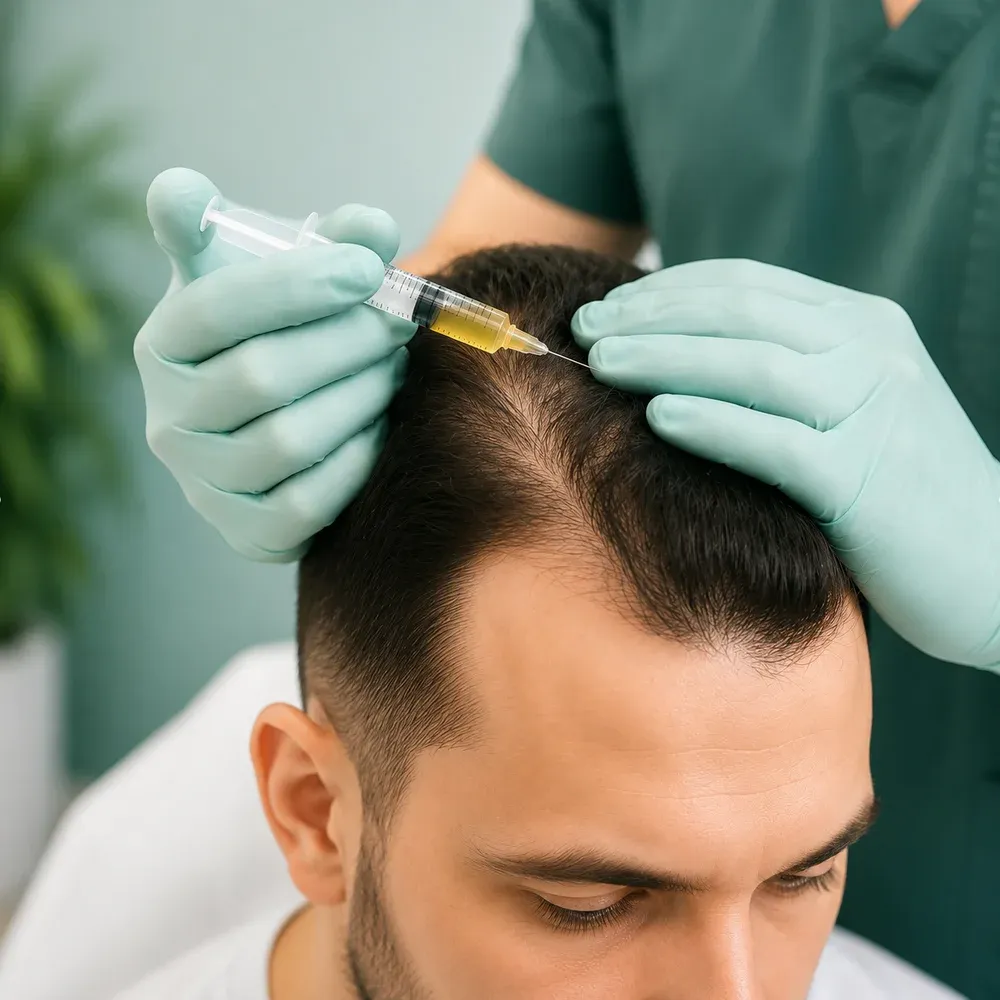
- Check-in and review.
- Blood draw.
- Centrifuge processing.
- Scalp preparation.
- PRP injections.
- Aftercare instructions.
Sessions, results and cost
How many sessions. Many PRP protocols involve a series of initial sessions followed by maintenance. A common concept is an initial series, a response review and maintenance sessions if helpful. The exact schedule should be determined after evaluation. Do not expect one session to solve hair loss.
When you may see results. PRP results, when they occur, take time. Some patients notice reduced shedding first. Others may notice improved thickness or density later. It may take several months to judge response. Photos help track changes.
Cost. PRP starts at $290 per session ($190 for returning and transplant patients), with packages of 2 sessions for $490 and 5 sessions for $990. Your evaluation confirms whether it is used as a standalone treatment or as part of a transplant support plan.
PRP vs FUE
| Question | PRP | FUE |
|---|---|---|
| Is it surgical? | No | Yes |
| Moves hair? | No | Yes |
| Best for | Early thinning, maintenance, support | Defined hair loss areas |
| Helps bald areas? | Limited if follicles are inactive | Can restore selected bald areas |
| Requires donor area? | No | Yes |
| Results timeline | Months | 9 to 12 months for maturation |
Frequently asked questions
Frequently asked questions
Does PRP work for hair loss?
Is PRP better than hair transplant?
Can PRP regrow hair in bald spots?
Is PRP safe?
How many sessions do I need?
Can PRP be combined with stem cells or exosomes?
What to expect from PRP therapy
Platelet-rich plasma (PRP) uses concentrated platelets from your own blood. A small amount of blood is drawn and processed before the plasma is placed at selected scalp injection sites. Growth factors in PRP are part of the biological rationale for treating hair thinning. They do not establish that every patient will respond.
Our assessment considers your diagnosis, scalp condition and treatment history. Temporary tenderness, swelling or bruising can occur at the injection sites. We review risks and side effects before treatment and track progress with follow-up photographs. See our PRP hair loss treatment in Tijuana page for the service and treatment planning.
Ready to Reclaim your Confidence?
Start with a free, no-obligation evaluation.