
Hair Transplant Recovery Timeline: What Happens Month by Month
What healing after FUE really looks like from the first days through the first year, including crusting, shock loss, the resting phase and gradual regrowth. A transplant is judged in months, not days.
Fully performed by a doctor
Along with a medical team
Packages from $3,950 USD
Clear pricing after evaluation
Only 20 min from San Diego
One planned visit to Tijuana
12 months of medical follow-up
Support after you return home
Set your expectations
Recovery is measured in months, not days
Hair transplant recovery is not instant. Many patients feel excited right after surgery because they can already see the newly placed hairs. Then those hairs shed, and that shedding can feel alarming when no one explains it in advance.
Knowing what each stage looks like (crusting, shock loss, the quiet resting phase and gradual regrowth) is what keeps a normal recovery from feeling like a failed one.
A hair transplant is judged in months, not days.
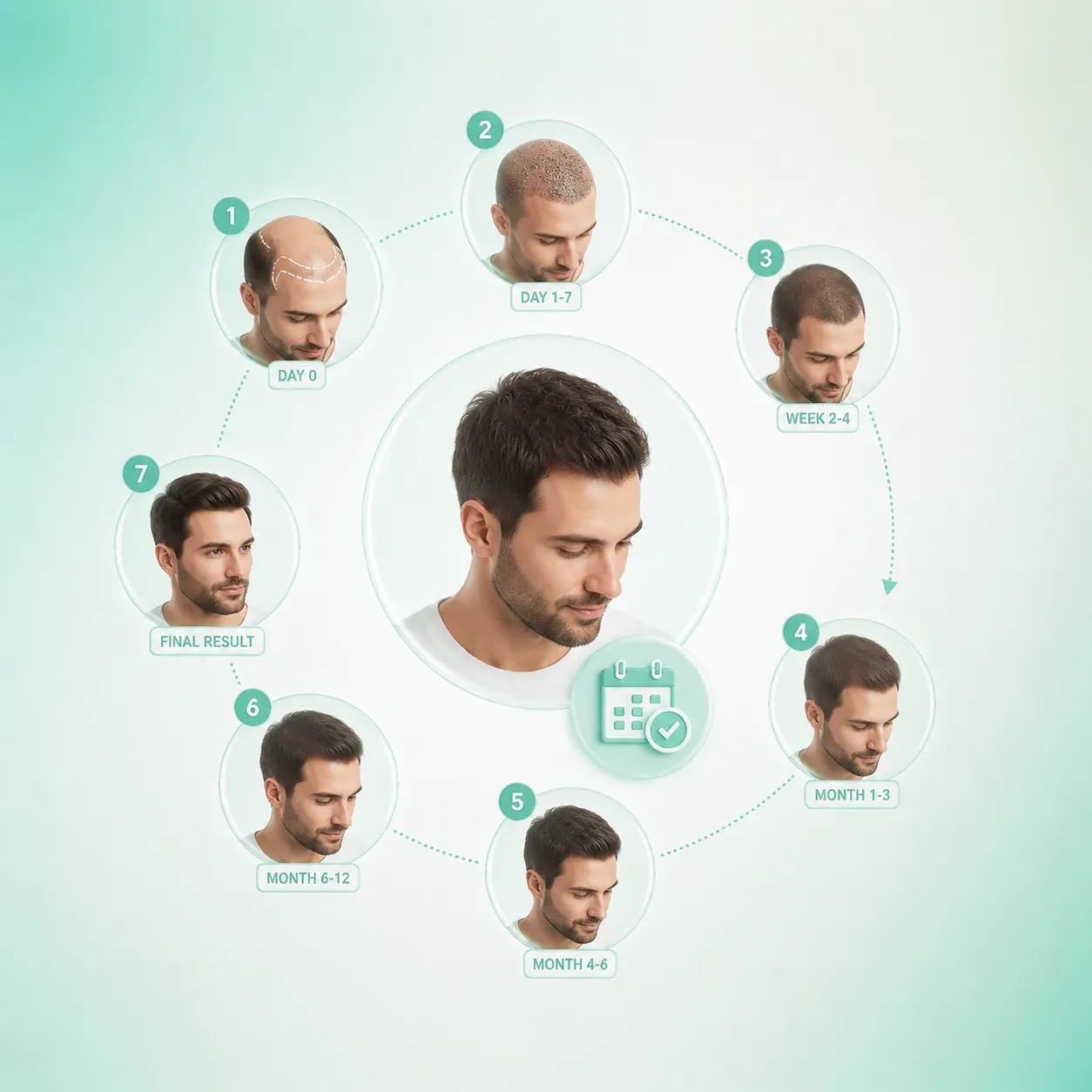
Day 0 to final result, the same head twelve months apart
The recovery timeline
What happens, stage by stage
Seven stages, from the day you leave the clinic to the twelve-month review. Tap any stage to follow the journey.
You leave the clinic
The donor and recipient areas are sensitive. You may notice redness, small crusts starting to form, mild swelling and donor-area tenderness, along with medication, sleeping and cleaning instructions. The first night matters most, so avoid any pressure on the grafts.
Redness and swelling
Redness and swelling are common, and swelling can drift toward the forehead, usually temporary. Avoid touching or scratching the grafts, heavy sweating, direct sun and hats unless approved. Contact the clinic if anything feels unusual.
The crusts shed
Crusts become more noticeable and then begin to fall, and the scalp may itch, so do not pick. The clinic explains how to wash the scalp and when crusts should be loosened. By the end of this phase many patients already look much more normal.
The transplanted hairs shed
The visible shaft falls, but the follicle stays alive under the skin, which does not mean the transplant failed. Some patients also shed surrounding native hair, which is worth discussing with the clinic.
The “ugly duckling” phase
Month 2 can look much like before the procedure while the follicles rest. Around month 3 early growth may begin, though uneven, and by month 4 more hairs appear with early improvement. Do not judge the result this early.
Visible change arrives
By month 6 many patients see meaningful change, though density is still developing. From month 7 to 9 density keeps improving, shafts thicken and styling gets easier. Crown growth can feel slower to show.
Mature results
Many patients see mature results between month 10 and 12, and some keep improving past a year. The final look depends on graft survival, donor quality, hair caliber, the density plan, treated area, aftercare and health history.
Shedding between weeks 2 and 8 is normal shock loss. The visible shaft falls but the follicle stays alive under the skin. Growth is gradual, and many patients see their final result between month 10 and 12.
At a glance
The recovery timeline in one table
Timing is typical, not guaranteed. Your recovery is reviewed case by case.
During recovery
What to watch for and what you control

Your follow-up · 12 months
Meet Adelina, your recovery follow-up coordinator.
Adelina CovarrubiasPost-care & follow-up specialist
Adelina is your point of contact throughout your 12-month follow-up program. She coordinates your check-ins, progress photos and recovery questions, keeping you connected to your medical team after you return home.
You will know who to contact, when to send updates and what comes next. Your treating medical team provides clinical guidance and reviews any concerns that need medical attention.
Hair shafts, transplanted follicles and the growth cycle
The visible hair shaft and the follicle beneath the scalp are different structures. Post-op shedding of a transplanted hair shaft does not by itself mean the transplanted follicle has been lost. New hair growth develops gradually as follicles move through their growth cycle.
Follow the washing instructions provided by our team for your transplant area. Gently wash only as directed and avoid picking at crusts as scabs form and loosen. Your post-procedure plan takes account of the area treated and your healing progress. Use our FUE recovery FAQs for common questions and contact our team about symptoms that concern you.
Ready to Reclaim your Confidence?
Start with a free, no-obligation evaluation.