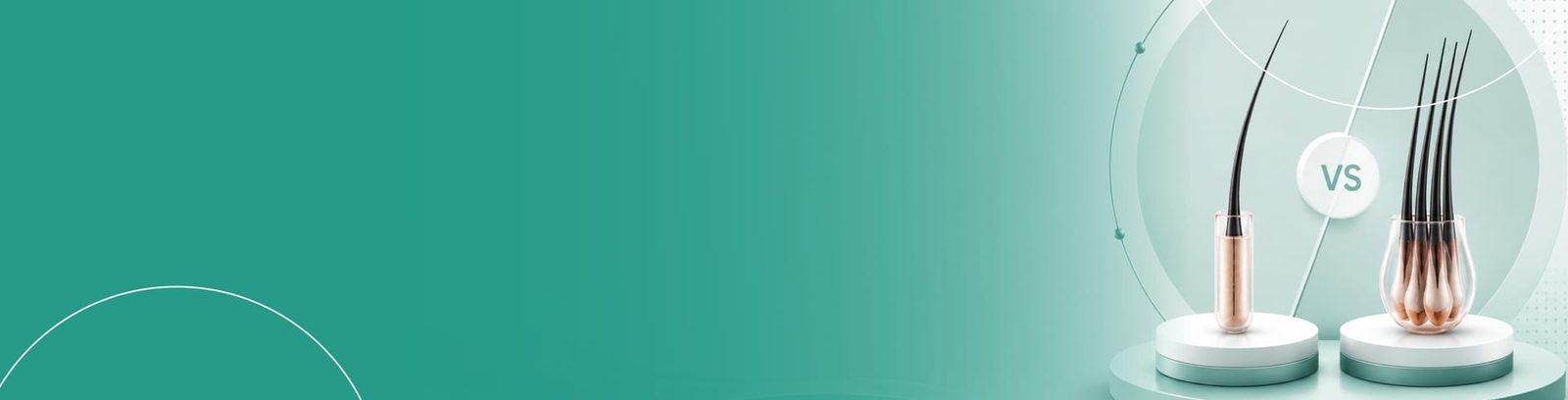
What’s the difference between a hair graft and a follicle?
The two terms are easy to mix up, but they mean different things in hair restoration. A plain-language guide to what each one is and why the difference matters when planning a transplant.
Fully performed by a doctor
Along with a medical team
Packages from $3,950 USD
Clear pricing after evaluation
Only 20 min from San Diego
One planned visit to Tijuana
12 months of medical follow-up
Support after you return home
Follicle, follicular unit, graft
Clinics mix these words constantly, and if you think one graft equals one hair, the numbers in a quote can mislead you. Here's each term, untangled:
The living structure below the scalp that produces hair. The shaft you see is only the visible part. In pattern hair loss, follicles miniaturize. The hair grows back thinner and weaker each cycle.
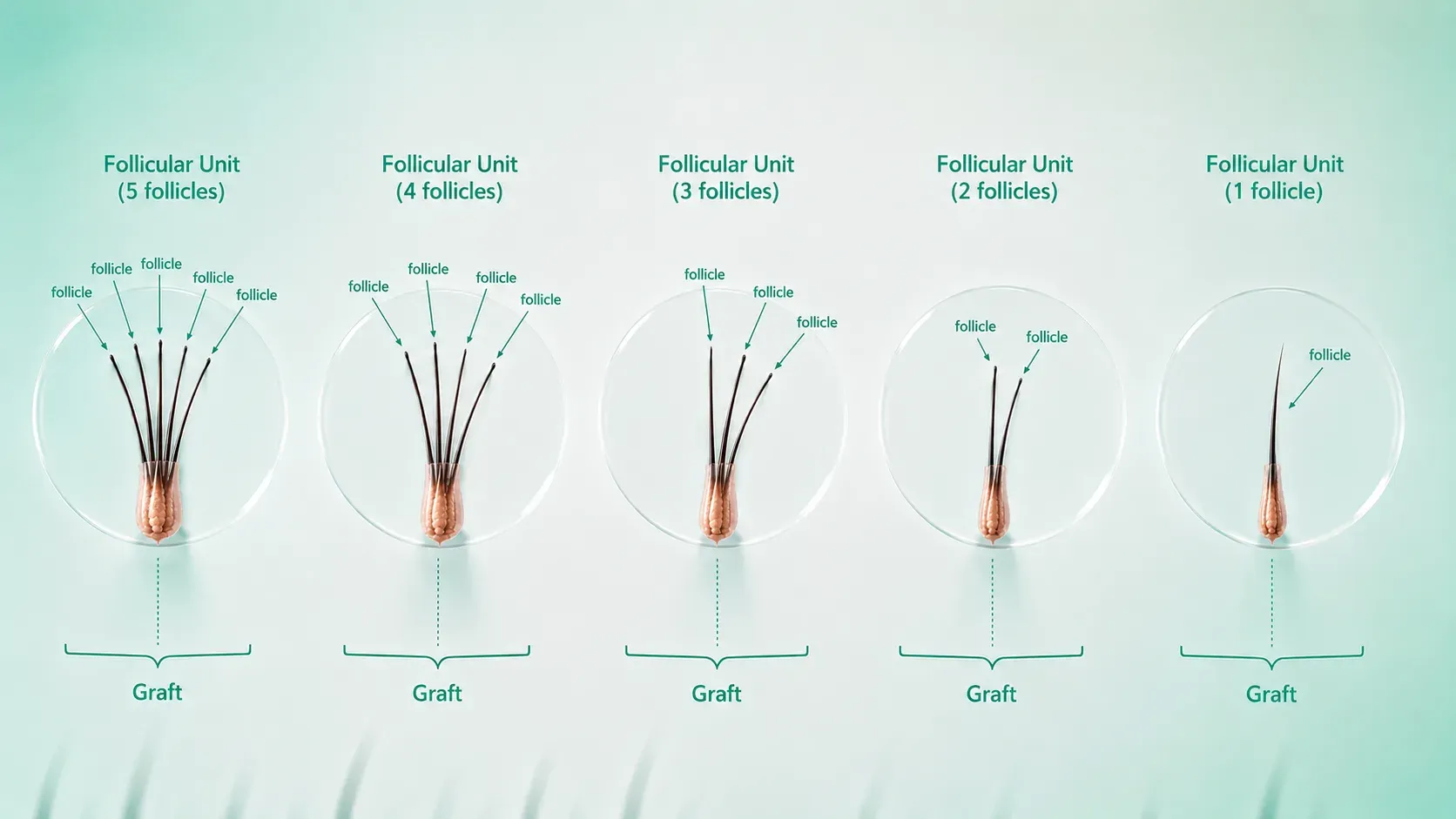
Scalp hairs don't grow alone. Under magnification they grow in natural groups of 1 to 4 hairs. That group is a follicular unit.
The unit a surgeon actually moves during an FUE transplant, usually one whole follicular unit. One graft may carry 1, 2, 3 or sometimes 4 hairs.

One graft is not one hair
A 2,000-graft procedure usually involves more than 2,000 hairs, because many grafts carry two or three. Each graft is a follicular unit of one to five follicles, and each size works best in a different area.
The most hairs a graft carries, for density
Four hairs for the mid-scalp and crown
Three hairs that start building density
Two hairs, just behind the hairline
A single hair, for the softest hairline edge
Singles build a natural hairline
A real hairline isn't a wall of thick hairs. It's fine single hairs with slight irregularity, placed at the right height, angle and direction, with density built gradually behind it.
Multi-hair grafts build density
Behind the hairline and in the crown, two- and three-hair grafts create more visual coverage per graft, for fuller results without wasting donor hair.
This is also why two patients can both receive 2,000 grafts and see different density. The multi-hair mix, hair caliber and area to cover all differ.
More grafts is not always better
Clinics usually price by graft count, which makes big numbers sound like a better deal. But your donor area is a limited resource, and a responsible quote is built on your case, not on volume.
Overharvesting is permanent
Take too many grafts and the back of the scalp looks thin or patchy, for good.
Hair loss continues
A plan that spends your donor supply today can leave nothing for the loss that comes later, especially in younger patients.
A real quote looks at your case
Area to restore, donor density, hair caliber, pattern, future risk, hairline design. Not just a graft number.
At TJ Hair System™, packages start from $3,950 USD; the final recommendation always depends on physician review. Get a case-based quote →
9 questions to ask any clinic before you choose
- 1How do you estimate graft count?
- 2Who evaluates my donor area?
- 3Who designs the hairline?
- 4Do you use single-hair grafts at the hairline?
- 5How do you avoid overharvesting?
- 6What happens if I continue losing hair?
- 7What follow-up is included?
- 8Can I see results by timeline and case type?
- 9Will my final quote be based on physician review?

Grafts & follicles FAQ
Frequently asked questions
Is one graft the same as one follicle?
Is one graft the same as one hair?
Why do clinics count grafts instead of hairs?
How many hairs are in 2,000 grafts?
Are multi-hair grafts better?
Can too many grafts damage the donor area?
Should I choose the clinic that offers the most grafts?
What does “hairgraft” mean in a transplant plan?
A hair graft, sometimes written as hairgraft, is the small piece of tissue transferred during hair transplant surgery. In FUE, a graft usually contains one follicular unit. The follicles are the structures that produce hair, and a follicular unit can contain more than one follicle.
Your hair transplant procedure moves grafts from the donor site into the area being restored. Graft count and hair count describe different things. Ask for the planned treatment area and donor assessment alongside either number. Read our graft vs follicle FAQ and guide to how many grafts you may need.